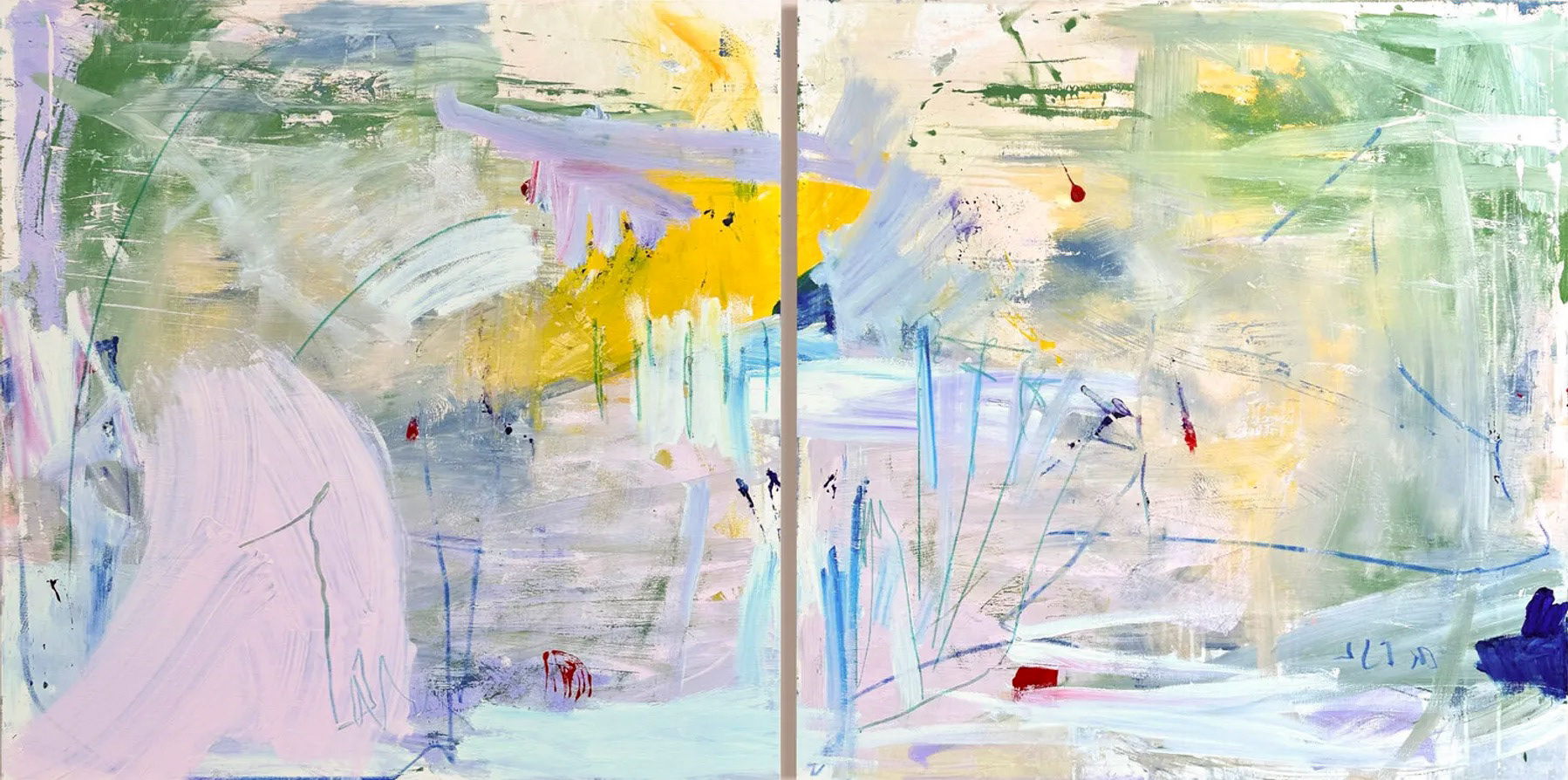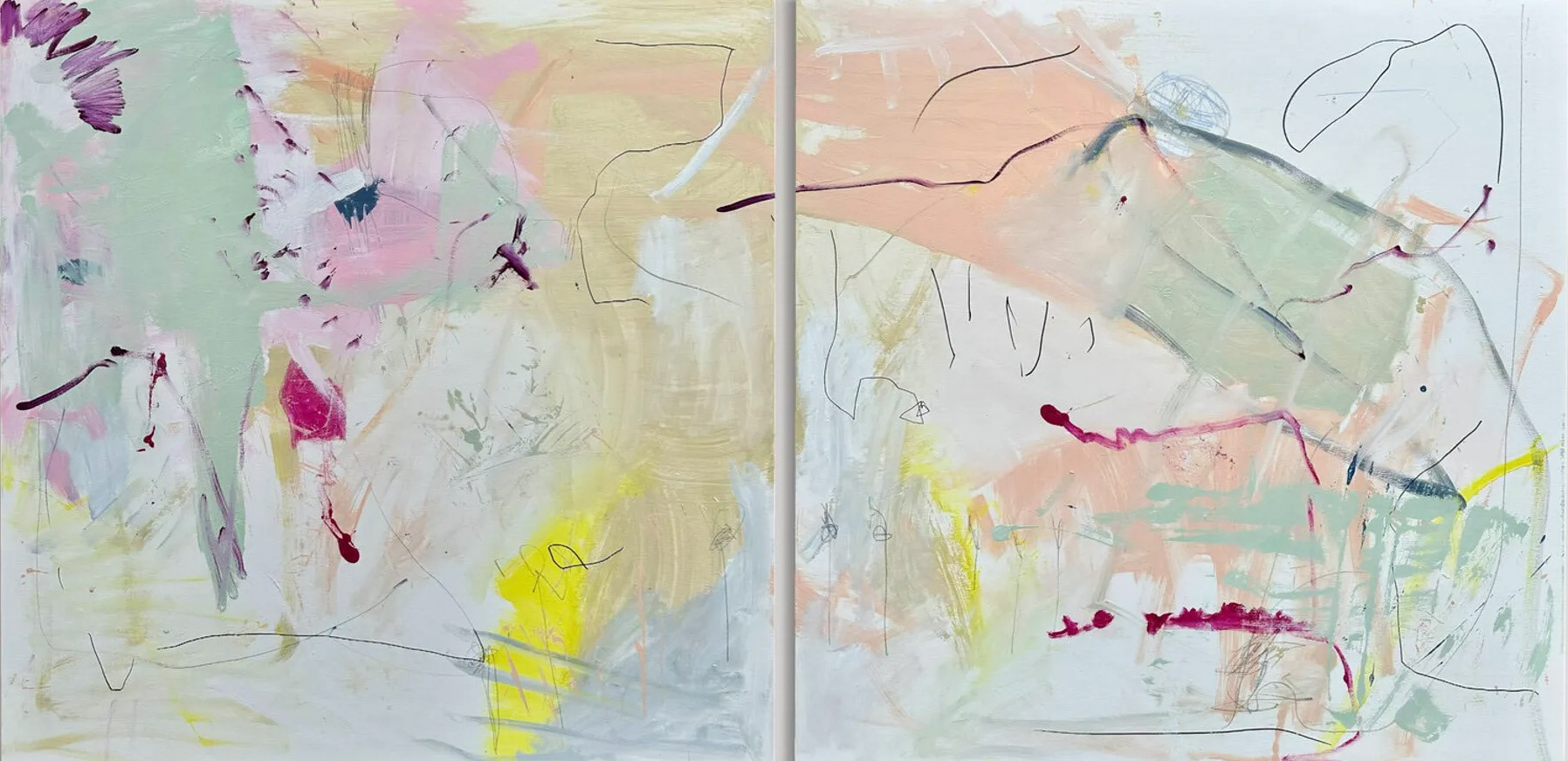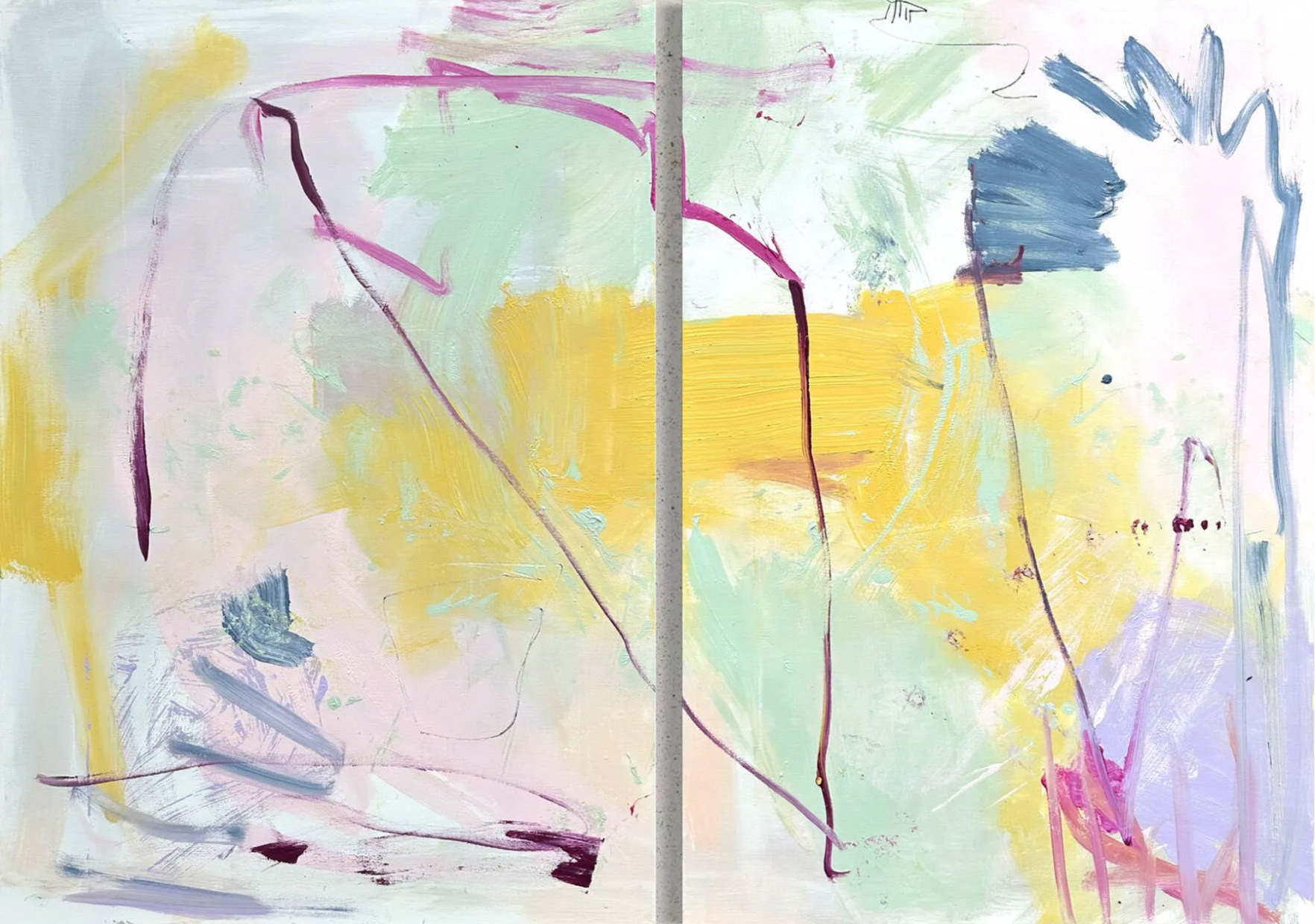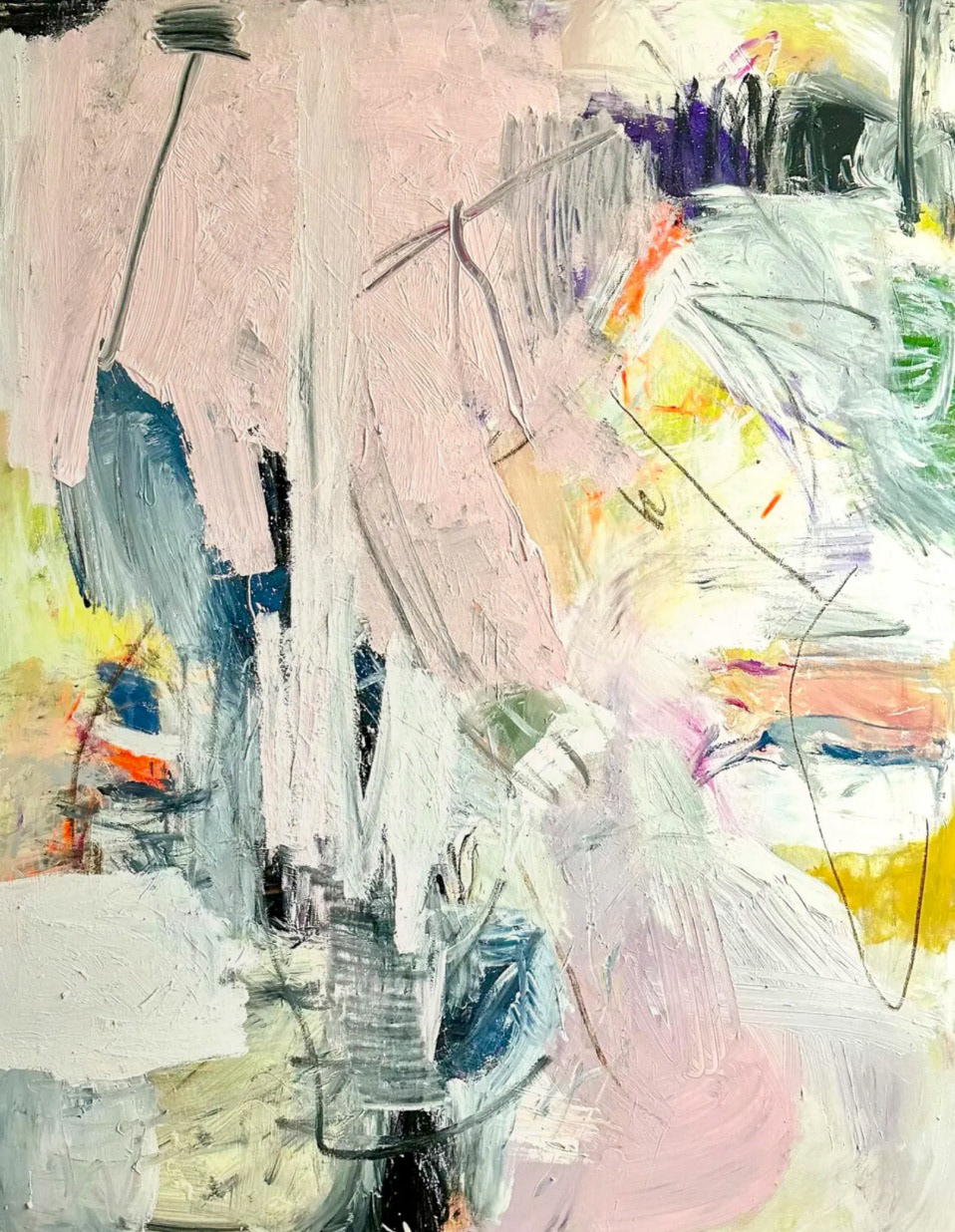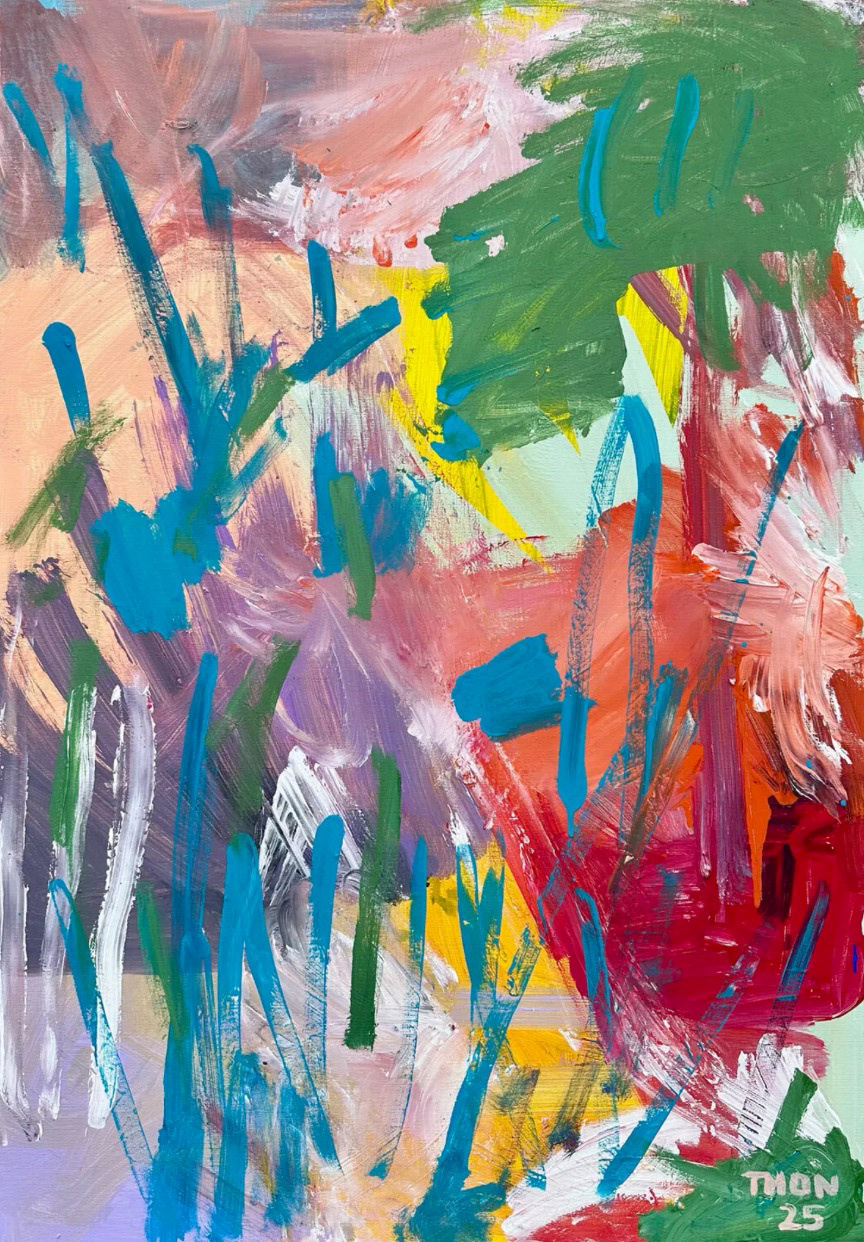
Some of my works emerge from a place I call an “inner landscape.” It is a space within me that is not visible, but tangible. A place where one can dance, cry, feel free, let go. There, I am entirely myself, without mirrors, without expectation, without observation or judgment. Through painting, this space becomes visible; it takes on form, color, and depth.
I used to describe this place as an “inner space,” because the term initially felt safer to me in its symbolism, something enclosed, protective. Over time, through my work, this space opened up and became an “inner landscape.” The moment the inner is carried outward, it loses its boundaries. It becomes wide, organic, alive — a landscape that can be observed, entered, perhaps even inhabited.
To paint an inner landscape means turning this protected place outward. It is always an act of overcoming and courage, because one reveals oneself in a figurative sense, exposed, with everything that lives within. The painting becomes an invitation for others to enter this place, to recognize themselves within it, or to find rest there.
In their structure, many of these works recall actual landscapes. There is expansiveness and density, distance and closeness, horizons and transitions. Yet everything remains organic; nothing is constructed. These forms do not arise from the intellect, but from a state of stillness, similar to meditation.
This kind of painting is only possible when one reaches a state in which nothing disturbs and everything is allowed to be present. Even what initially feels disruptive is part of the whole, like the sound of a garbage truck during meditation. Only when one stops judging does true calm emerge. This attitude of acceptance, letting go, and allowing things to unfold is the core of these works.